
If you run a local business, you have probably asked this at least once. Do Google reviews help SEO, or are they just a trust signal for people who already found you? My view is pretty firm here. Reviews do help local SEO. They are not magic, and they will not rescue a weak business profile, but they do influence how visible you are in local search.
Google has said for years that review signals matter in local ranking. You can see it in real search results too. Businesses with a steady flow of reviews, strong ratings, and active responses tend to look more alive. That matters to search engines, and it matters to customers. Google wants to show businesses that feel current, trusted, and useful. Reviews help prove all three.
Still, this topic gets messy fast. People ask, does Google reviews help SEO in the broad organic sense, or only in the map pack? The honest answer sits in the middle. Reviews have the strongest effect on local SEO, especially in Google Business Profile results. They can also support wider search performance by improving clicks, trust, branded searches, and on-page engagement after someone finds you. So yes, the impact is real, but it works through more than one path.
In this article, I will walk you through what reviews influence, what they do not, and how you can turn them into a steady ranking asset without annoying your customers or risking policy issues.
How Google reviews affect local SEO

When people talk about local SEO, they usually mean one of two things. They mean the local map pack, or they mean location-based organic results. Google reviews have the strongest connection to the map pack because they sit inside your Google Business Profile. That profile feeds Google direct signals about your business activity, reputation, and relevance.
Review quantity matters because it shows that your business is active and getting customer feedback at a steady pace. Review quality matters because ratings affect trust. Review recency matters because stale profiles can look neglected. Review content matters because customers mention services, products, and locations in their own words. I keep coming back to that last point. Review text is underrated. It gives Google natural language context about what you do and where you do it.
Say you own a roofing company in Austin. If your reviews mention roof repair, storm damage, gutter work, and neighborhoods you serve, Google gets stronger clues about your local relevance. You did not stuff keywords into your profile. Your customers handed Google those signals on a plate. That is part of why reviews can move rankings in a way that feels indirect but still powerful.
There is also the click factor. A business with a stronger rating and a healthy review count tends to win more clicks. More clicks can lead to more calls, direction requests, site visits, and branded searches. Google pays attention to user behavior. It may not treat every click as a ranking vote, but stronger engagement can reinforce your visibility over time.
What review signals seem to matter most
Not all review signals carry the same weight. If I had to rank the ones that matter most in practical terms, I would start with volume, recency, rating, and keyword-rich review text. I would also add owner responses because they show activity and care, which many business owners ignore for far too long.
Here is a simple breakdown of how these signals tend to work:
Review signal | Why it matters | What you should do |
|---|---|---|
Volume | Shows steady customer activity and trust | Ask for reviews consistently, not in random bursts |
Recency | Fresh feedback makes your profile look active | Build an ongoing request process after service is complete |
Star rating | Affects trust and click behavior | Improve service and respond to unhappy customers fast |
Review text | Adds relevance around services and locations | Ask customers to describe their experience in detail |
Owner responses | Shows engagement and profile activity | Reply to positive and negative reviews with care |
One thing I would not do is obsess over hitting a perfect 5.0. That can look a bit suspicious, and it can even make people pause. A strong rating with authentic feedback usually performs better in the real world than a profile that looks polished to the point of being weird. People trust businesses that feel human.
You should also avoid getting a flood of reviews in one week and then disappearing for months. Google likes patterns that look natural. Customers do too. A steady stream beats a spike almost every time.
If you need a process for that, this guide on how to get more Google reviews lays out practical ways to ask without sounding pushy.
Do reviews help organic SEO outside the map pack
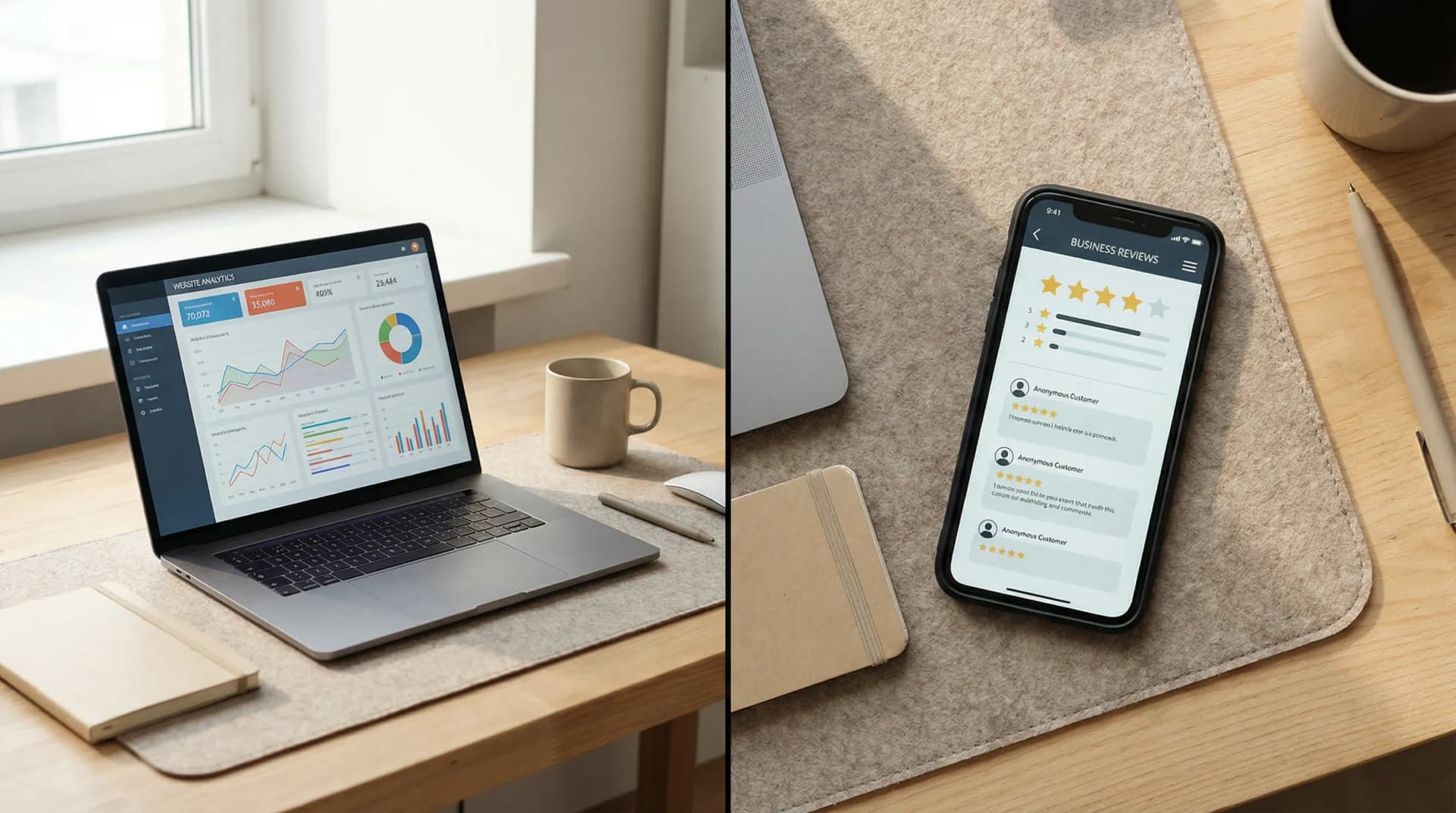
This is where people tend to overstate things. Google reviews are not a direct ranking factor for your website in the same way page content, links, and technical health are. If your site is slow, thin, or poorly structured, reviews will not patch that up. I wish it worked that way. It would make life easier. It does not.
What reviews can do is support organic SEO around the edges in ways that add up. A strong review profile can improve click-through rates when your rating appears with branded searches. It can increase trust before a visitor lands on your site. It can push more people to search your business name after seeing you in maps or local results. Those are second-order effects, but they matter.
Reviews can also shape conversion behavior once people compare you with nearby competitors. If your business has 180 reviews and your competitor has 12, that gap changes how people behave. More calls. More direction requests. More branded demand. Search visibility and customer behavior feed each other more than people admit.
So if your question is, does Google reviews help SEO for your website pages alone, I would say not in a clean, direct way. If your question is whether reviews improve your total local search presence, then yes, they can move the needle. That broader view is the one worth caring about.
Why review recency and response habits matter
A business profile with old reviews can feel abandoned. You may still do solid work, but your listing tells a different story. Google wants current signals. Customers want them too. If your latest review came eight months ago, people start wondering what happened. That doubt can hurt clicks before rankings even enter the picture.
Recency does not mean you need daily reviews. It means your profile should show ongoing customer activity. A dentist, home service company, law office, or salon can all build that rhythm with a simple ask at the end of a successful visit or job. The system matters more than the volume spike.
Responses matter for a similar reason. When you reply to reviews, you show that someone is paying attention. That helps with trust, and it may help your profile stay active in Google's eyes. I also think responses are one of the easiest wins in local SEO because so many businesses still ignore them. They spend money on ads, then leave public feedback unanswered for months. I genuinely do not get that.
When a bad review shows up, reply calmly and try to move the issue offline. Do not argue in public. Future customers read those exchanges. If you need help with that part, this article on how to handle a one star Google review can help you avoid making a rough situation worse.
Tools can make this process easier. A platform like RatingFlow's review funnel system helps you request feedback at the right time and manage responses without turning review collection into a manual chore.
How to get SEO value from reviews without breaking policy

This part matters. A lot. Businesses get impatient and start trying to force the outcome. They buy reviews, gate feedback in shady ways, or pressure customers into using exact keywords. That can backfire fast. Google is not naive, and customers can smell fake praise from a mile away.
The safer path is also the smarter one. Ask every happy customer for honest feedback. Make it easy to leave a review with a direct link, text message, or QR code. If your team struggles to keep requests consistent, use a system that automates the follow-up. You can see how that works on the RatingFlow features page.
When you ask, do not script the review. Ask customers to mention what service they received and what stood out about the experience. That invites natural detail without crossing into manipulation. If they mention your city or neighborhood on their own, even better. Those location cues can strengthen local relevance.
You should also watch for missing reviews. This happens more than business owners expect. If feedback disappears or never shows up, it may be tied to filtering, account issues, or policy checks. If that sounds familiar, this guide on why a Google review is not showing can save you a lot of confusion.
One more thing. Do not fear negative feedback so much that you stop asking. A profile with mixed but believable reviews can still perform well. In some cases, it performs better because people trust it more. What hurts is silence, not imperfection.
What local businesses should do next
If your Google review profile is weak, start with consistency. Set up a review request process that runs after a completed sale, appointment, or service call. Train your staff to ask in a natural way. Keep the path short. One tap is better than five. Friction kills follow-through.
Then focus on response habits. Reply to fresh reviews every week. Thank happy customers with a short, personal note. Respond to unhappy customers with patience and a plan. Do not copy and paste the same message 40 times. That looks lifeless, and people notice.
After that, look at your full local presence. Reviews matter, but they work best when your Google Business Profile is complete, your website has location pages, and your business details stay consistent across the web. Reviews are part of the engine, not the whole machine.
If I had to boil it down, I would say this. Google reviews help local SEO because they send trust, relevance, and activity signals. They can improve rankings in the map pack. They can improve clicks and conversions. They can strengthen your wider search presence over time. That is enough reason to treat review generation as part of your SEO process, not some side task you get to later.
And if you want to build a repeatable review system instead of chasing reviews when you remember, take a look at RatingFlow. The businesses that win local search are rarely doing one flashy thing. They are doing the boring things consistently. Reviews are one of those things. Boring, yes. Powerful too.