
If you want more local leads, you need more trust. That is where Google reviews pull more weight than almost anything else on your profile. People scan your star rating, read a handful of comments, and make a snap call about whether your business feels safe, credible, and worth contacting. It happens fast. Faster than most owners think.
I keep coming back to this because many businesses do solid work and still get ignored online. Not because their service is weak, but because their happy customers stay quiet. Meanwhile, one frustrated customer writes a long complaint and suddenly that becomes the loudest story on your profile. That imbalance is brutal, and it is common.
If you are trying to figure out how to get more Google reviews, you do not need gimmicks. You need a repeatable system. You need to ask at the right time, make the review step easy, remind people without being annoying, and route unhappy customers away from your public profile so you can fix the issue in private. That last part matters more than people admit.
This guide walks through practical ways to increase google reviews for businesses without sounding pushy or desperate. You will see how to use review links, QR codes, staff scripts, follow-ups, and funnels that help you collect a steady stream of feedback. If you want a tool built for that process, take a look at how RatingFlow works for automated review collection and how it helps businesses protect their online reputation.
Why Google reviews matter so much for local businesses
Google reviews shape two things at once. They affect how people feel about your business, and they can affect how visible you are in local search. That mix makes them hard to ignore. A polished website helps, sure. A clean logo helps. But when a prospect sees a competitor with more recent reviews and a stronger rating, your branding starts to feel secondary.
Reviews act like social proof with teeth. A person searching for a dentist, roofer, med spa, attorney, contractor, or agency wants reassurance from people who already took the risk. They want signs that your team shows up on time, communicates well, fixes problems, and delivers what was promised. A page full of recent feedback gives them that. A stale profile with two old reviews does not.
There is another layer here that I think many owners underestimate. Reviews change the tone of your brand before a customer ever speaks to you. If your profile is full of detailed praise, you walk into the conversation with momentum. If your profile is thin, people approach with caution. You can feel the difference in lead quality.
That is why a review strategy should sit inside your wider reputation plan, not off to the side as an afterthought. If you want context on that bigger picture, this guide to online reputation management for local businesses lays out how reviews, responses, and customer experience work together.
Make it easy for customers to leave a review
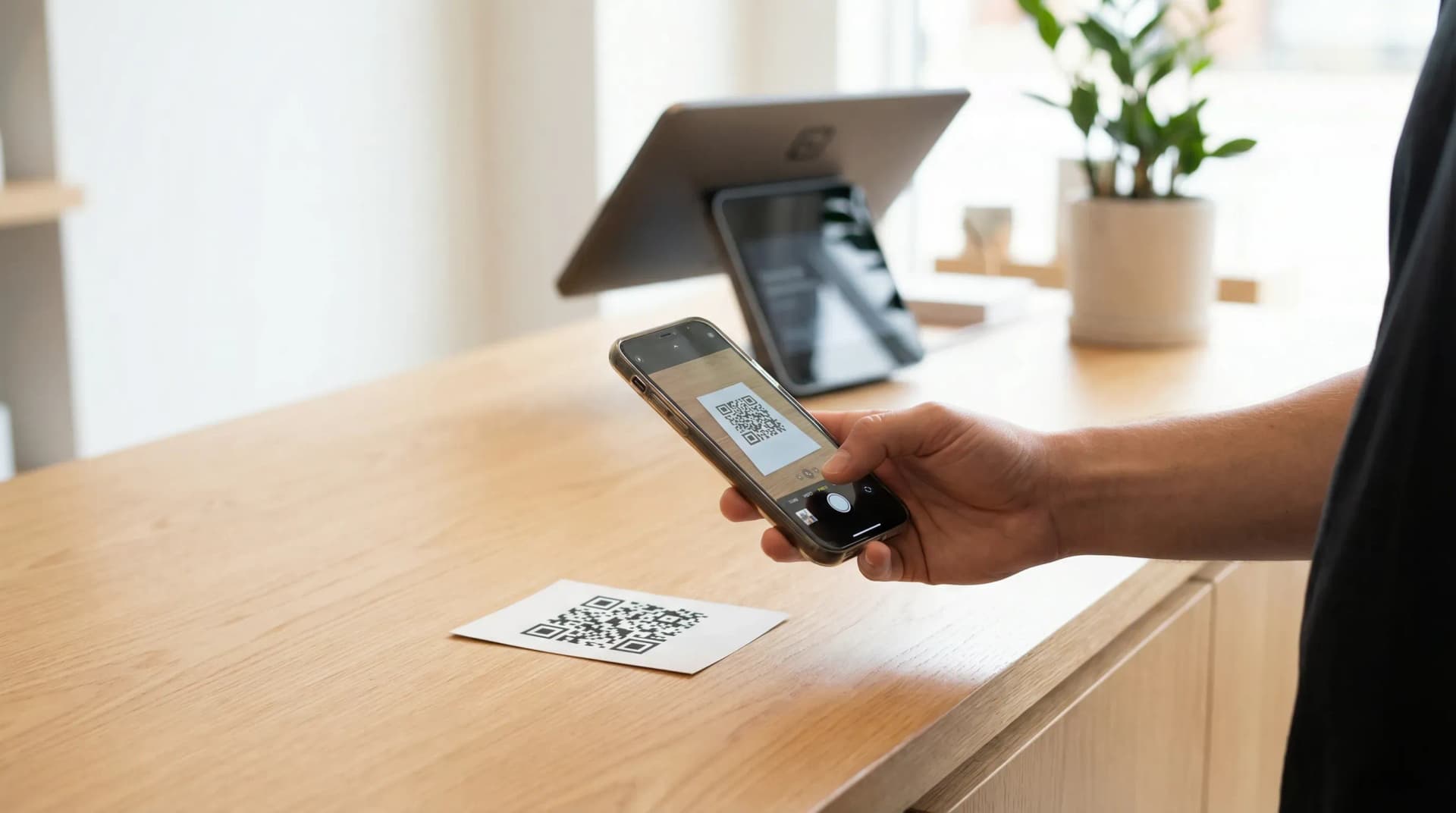
The fastest way to lose reviews is to add friction. If a customer has to search for your business, guess which profile is yours, log in, and hunt for the review button, a chunk of them will give up. Not because they dislike you. Because life gets busy and attention disappears in seconds.
You need a direct review link. Send people straight to the place where they can leave feedback with as few taps as possible. Put that link in text messages, emails, receipts, invoices, thank-you pages, and post-service follow-ups. If your team asks for reviews in person, they should be able to text the link on the spot. Waiting until later sounds polite, but it kills momentum.
QR codes help in physical locations. Put them at the front desk, on table tents, on packaging inserts, on business cards, and near the exit where a customer has a natural pause. A clean QR code works well because it removes typing. People scan, land on the review page, and decide in a moment whether to leave a 5 star google review. If the path is smooth, your odds rise fast.
The design matters too. Keep the call to action short. "Review us on Google" works because it is plain and direct. Fancy copy can get weird. I have seen businesses overthink this and turn a simple ask into a paragraph. That is a mistake. Give the customer one clear action and make it painless. If you need help with setup, RatingFlow has support content on how to generate a review QR code and how to share your review link by text or email.
Ask at the moment when satisfaction is highest
Timing changes everything. You can have the right link, the right message, and the right customer, then still miss the review because you asked at the wrong moment. The sweet spot comes right after a positive outcome. That might be after a successful appointment, a completed project, a smooth delivery, or a support interaction where your team solved a headache fast.
Think about emotional temperature. When a customer says, "Thanks, that was easy," or "This looks great," that is your opening. Ask then. Do not wait three days and hope they still feel the same spark. Satisfaction cools down. Memory gets fuzzy. The urgency disappears, and your request sinks to the bottom of their inbox.
Train your staff to listen for those signals. A front desk employee, technician, account manager, or cashier can make a huge difference if they know when to ask. Keep the script natural. Something like, "I am glad we could help. Would you mind leaving us a Google review? I can text you the link." That line works because it sounds human. It does not sound like a corporate campaign.
You should also build review asks into your workflow so they do not depend on memory. Trigger a follow-up message after a job closes. Send a thank-you email after a purchase. Add a text request after an appointment is marked complete. If you rely on your team to remember every time, you will get patchy results. Systems beat intentions.
Simple review request examples that feel natural
A service business can say, "Thanks for choosing us. If you have a minute, please review us on Google. Your feedback helps a lot." A medical or wellness office can say, "We appreciate you coming in. If your visit went well, we would be grateful for a Google review." A home service company can text, "Thanks again for having us out. Here is our review link if you would like to share your experience."
The wording does not need magic. It needs decent timing and a low-friction link. That is the part people miss.
Use a review funnel to protect your reputation

This is where things get more strategic. If you ask every customer to post publicly with zero screening, you invite risk. That may sound harsh, but it is honest. Some unhappy customers need a private channel before they head to Google, and giving them that option can save you from public damage while giving your team a chance to fix the issue.
A review funnel works by asking for feedback before sending the customer to Google. If the customer signals a strong experience, they get routed to your public review page. If they signal frustration, they get sent to a private feedback form instead. That gives you a shot to respond, resolve the problem, and learn what went wrong without turning every complaint into a permanent public post.
I think this approach makes sense for most local businesses. It respects happy customers by making the review process easy. It respects upset customers by letting them vent in a direct channel where someone can help. And it protects your brand from the chaos that comes when one rough interaction becomes the first thing future leads see.
That is the core idea behind RatingFlow review funnel features. You can automate review requests, guide satisfied customers toward Google, and capture negative feedback privately so your team can handle it before it spreads. If you have ever stared at a one-star review and thought, "This could have been solved with one phone call," you already understand why this matters.
Of course, no filter catches everything, and no system replaces service quality. If your customer experience is messy, a funnel will not hide that forever. But if your business does solid work and you need a cleaner way to manage feedback, this kind of structure helps a lot.
Build review requests into your daily operations

The businesses that collect reviews on a steady basis do not treat reviews like a random marketing task. They treat them like part of the customer journey. That is a subtle shift, but it changes results. Instead of asking when someone remembers, the ask happens at the same point every time. That consistency compounds.
Start by picking your trigger points. For a restaurant, it may be right after payment. For a contractor, it may be the final walkthrough. For a law firm, it may be after a matter closes. For an agency, it may be after a positive milestone or successful campaign result. Write those moments down. Then assign who asks, what they say, and how the link gets delivered.
Next, track response rates. If one team member gets far more reviews than the rest, study what they do. Maybe their timing is better. Maybe their tone feels warmer. Maybe they ask with confidence instead of awkwardness. Tiny differences matter here. Review generation is part process, part human behavior.
You should also rotate your channels. Text messages tend to get seen fast. Email works well when the customer relationship is more formal. Printed QR codes fit walk-in traffic. In-person asks work when your staff has strong rapport. You do not need one method. You need the mix that fits your business model.
One warning. Do not bribe people with discounts, gifts, or contests for reviews. That can create compliance issues and weakens trust. Ask for honest feedback. Make the process easy. Keep the volume steady. That approach takes more patience, but it ages better than shortcuts.
Handle negative feedback before it turns into a public problem
You will not keep every customer happy. That is life. What matters is whether you catch frustration early and respond like a serious business. A private feedback path gives you that chance. If someone says they had a poor experience, follow up fast. Slow replies make people feel ignored, and ignored people tend to get louder.
Read the complaint without getting defensive. I know, easier said than done. A lot of negative feedback feels unfair in the moment. Still, your goal is not to win an argument. Your goal is to lower the temperature, understand the issue, and see whether a fix is possible. A refund, redo, apology, clarification, or direct call can change the whole trajectory.
Even with a smart funnel, public negative reviews will still happen. When they do, respond calmly and with respect. Do not copy-paste robotic statements. People can smell that from a mile away. Write like a person who cares and wants to resolve the issue. If you need guidance, this article on how to handle a one-star Google review gives a solid framework.
You should also watch for technical issues. Sometimes customers say they left a review, but it does not show up. That can happen for several reasons tied to Google's filtering. If that comes up, this guide on why a Google review may not be showing can help you troubleshoot what happened.
What a sustainable Google review strategy looks like
A healthy review strategy is not a one-week push. It is a steady rhythm. You ask happy customers at the right time. You make the review step easy. You use QR codes and direct links where they fit. You route complaints into a private channel. You respond to feedback with care. Then you repeat that cycle until it becomes part of how your business operates.
If you do this well, your profile starts to tell a stronger story. You get fresher reviews, a healthier average rating, and more detailed comments that help future customers trust you. That trust can lift conversion rates in a quiet but powerful way. Prospects stop wondering whether they should contact you. They start wondering how soon you can help.
That is what people mean when they talk about google reviews for businesses as a growth driver. Reviews are not fluff. They shape buying decisions, local visibility, and brand perception all at once. I would go further than that. For many local businesses, review generation is not optional marketing polish. It is part of staying competitive.
If your process is still manual, messy, or dependent on staff memory, there is a better way to run it. You can see RatingFlow for an overview, or compare plans on the RatingFlow pricing page if you want a system that automates requests, filters negative feedback, and helps you collect more public reviews without adding chaos to your day.