If you have ever searched for ways to get more reviews, you have probably seen the pitch. Buy Google reviews. Buy Google 5 star reviews. Get a batch delivered fast. It sounds easy, and that is exactly why it is dangerous.
I get why business owners feel tempted. Reviews affect clicks, calls, rankings, and trust. When a competitor has hundreds of glowing ratings and your profile looks thin, the pressure gets personal. You start thinking one shortcut might close the gap. But buying fake Google reviews is one of those moves that feels smart for about five minutes and then starts rotting from the inside.
Google wants reviews from real customer experiences. Customers want the same thing. If you try to manufacture trust, you are gambling with your listing, your reputation, and your future revenue. That is a brutal trade.
This article explains why you should not buy fake Google reviews, what can go wrong, and what to do instead if you want more ratings without putting your business at risk.
Why buying fake Google reviews backfires fast

People buy fake reviews for one reason. They want social proof on demand. A profile with more stars looks stronger than a profile with silence. I understand the urge. Empty review sections feel awkward. Low review counts feel unfair. Still, fake praise creates a mess that spreads in ways most owners do not expect.
Start with the obvious problem. Purchased reviews do not come from real customers. That means they often sound vague, generic, or weirdly enthusiastic. They mention no staff names, no service details, no local context, and no believable timeline. A human reader may not know why a review feels off, but they can feel it. That feeling matters. Trust drops before they can even explain it.
Then there is the platform risk. Google has systems that look for suspicious review activity. Sudden spikes, repeated phrasing, reviewer accounts with strange patterns, and clusters from unrelated locations can raise flags. You may pay for fifty reviews and wake up to find half missing. Or your profile may get restricted. Or the damage may come later, after you have built decisions around numbers that were never stable.
There is also a deeper problem that bugs me more than the technical side. Buying reviews teaches your business the wrong lesson. It tells your team that appearance matters more than customer experience. That is a slippery mindset. Once you start polishing the outside with fake signals, it gets easier to ignore the hard work inside the business.
The risks of trying to buy Google 5 star reviews
When people search for buy Google 5 star reviews, they are not looking for nuance. They want high ratings, fast. Five stars look clean. Five stars lift averages. Five stars can make a struggling profile seem healthy overnight. I understand the appeal. I also think it is one of the easiest ways to make your business look suspicious.
Think about how real review profiles behave. They have variation. Even strong businesses get four-star feedback, mixed opinions, and occasional frustration. Real customers write with emotion and detail. Their reviews sound uneven because human experiences are uneven. A sudden wall of five-star posts with thin wording does not look polished. It looks staged.
That pattern can hurt you with customers before Google ever steps in. People compare dates, phrasing, and reviewer names more than owners think. If ten reviews land within two days and each one says some version of "amazing service" with no specifics, people notice. They may not report you. They may do something worse. They may leave and call someone else.
There is another issue. Once you buy one batch, the pressure rarely stops. You may feel like you need to keep buying to maintain the average, cover low ratings, or keep pace with competitors. That turns into a treadmill. You are paying to preserve a lie, and lies are expensive to maintain.
If your goal is stronger local visibility, your energy is better spent on review generation that can survive scrutiny. RatingFlow exists for that exact reason. It helps businesses collect customer feedback through a structured process instead of taking reckless shortcuts. You can see how the platform works on the review funnel process page and compare tools on the RatingFlow features overview.
Google penalties and platform consequences
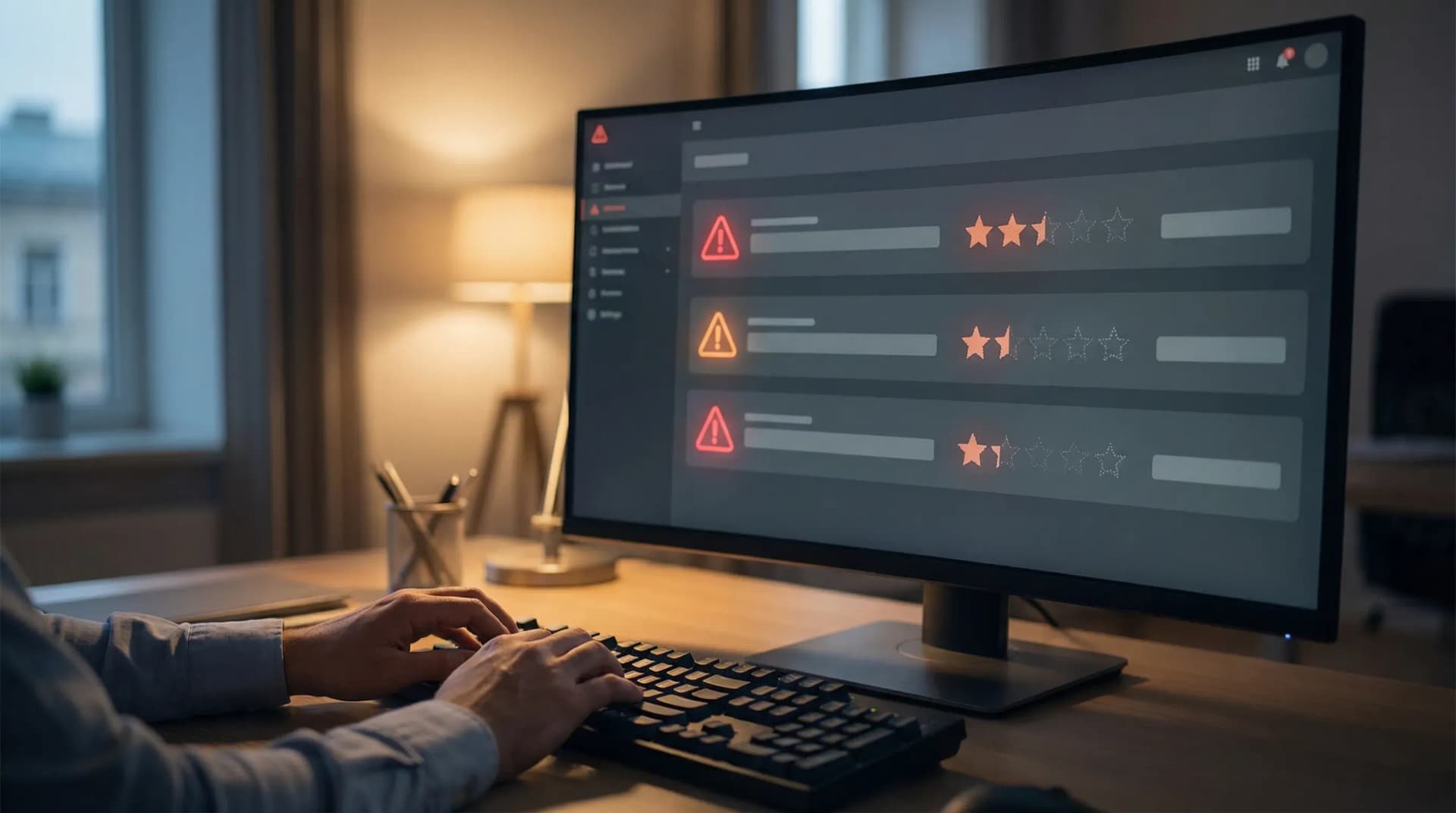
Google does not treat review manipulation as a harmless marketing trick. It treats it as spam. That distinction matters. Spam does not get a polite warning and a second chance in some neat, predictable sequence. It can trigger removals, filtering, reduced visibility, and account-level problems that are hard to untangle.
The mild version looks like disappearing reviews. You pay for them, they post, you feel relieved, then they vanish. That alone should tell you something. If the reviews were worth anything, they would stick. When they disappear, you are left with lost money and no durable benefit.
The harsher version hits your Google Business Profile. If Google believes your listing is involved in deceptive behavior, you could face suspension or restrictions. For a local business, that is not a small inconvenience. It can cut off calls, map visibility, direction requests, and trust at the exact moment you need them. I have seen owners obsess over rankings while ignoring the risk of losing the listing itself. That trade makes no sense.
Even if your profile stays live, manipulated review activity can muddy your data. You cannot tell which changes came from customer experience and which came from junk signals. That makes it harder to improve. If you want to build rankings through honest methods, this guide on how Google reviews affect local ranking gives a cleaner picture of what helps over time.
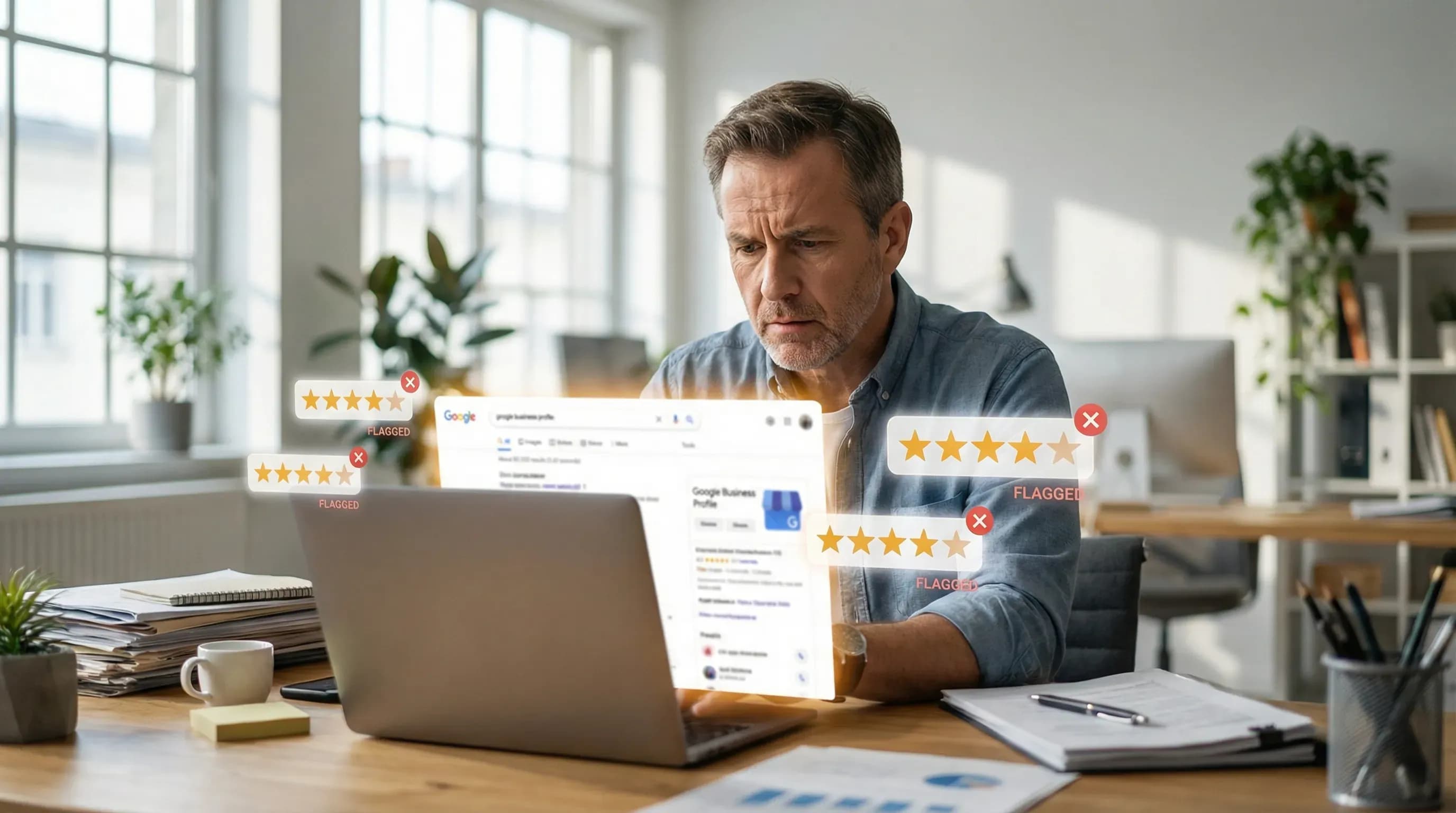
Google also lets users flag suspicious reviews. Competitors, customers, and former employees can report patterns that look off. Once scrutiny starts, you lose control of the story. That is the part many sellers of fake reviews leave out. They sell certainty. What they deliver is exposure.
Legal and ethical fallout for your business
The platform risks are serious, but the legal side can get ugly in a different way. Reviews influence buying decisions. When a business creates a false impression of customer satisfaction, regulators may view that as deceptive advertising. You do not need to be a giant brand to attract scrutiny. Local businesses can get dragged into complaints, disputes, and refund demands when trust breaks down.
Even without a formal case, the ethical hit can sting. Customers do not like feeling manipulated. If someone finds out you bought fake Google reviews, the damage spreads beyond the review section. They start questioning your service quality, your sales claims, and your honesty. Once that doubt lands, it is hard to shake.
I keep coming back to that part. The reviews were supposed to make you look safer to buy from. Instead, they make you look slippery. That is a rough word, but it fits. Trust is hard enough to earn when you are doing honest work. Why sabotage it with something this flimsy?
Your staff feels it too. Teams notice when leadership chooses image over substance. That can change culture in quiet ways. People stop pushing for service improvements because the numbers on the screen no longer reflect what customers think. A business that stops listening starts drifting.
How fake reviews hurt local SEO and customer trust
People talk about reviews as if they are only an SEO factor. They are not. Reviews sit at the point where search visibility and buyer psychology meet. That is why fake reviews do so much damage. They do not just risk rankings. They poison the trust that rankings are supposed to bring.
Searchers scan review count, average rating, recency, and wording in seconds. They are making snap judgments. If your profile feels unnatural, they may bounce before they ever visit your site. That weakens the value of the visibility you worked to earn. You may rank, but you do not convert.
There is also the issue of review quality. Real reviews often mention service categories, neighborhoods, staff interactions, timing, and outcomes. Those details help future customers understand what you do and whether you fit their needs. Purchased reviews tend to skip all that. They add noise instead of proof.
For local SEO, authentic review growth sends a cleaner signal than a burst of suspicious five-star posts. Steady review volume, honest feedback, and owner responses create a profile that looks alive and trustworthy. If you want practical ways to grow review count without risking your listing, read this guide on how to get more Google reviews. It is a slower path than buying reviews, but slower is not the same as weaker. In this case, slower is smarter.
And let me say the quiet part out loud. Some business owners buy fake reviews because they think customers cannot tell. That is a gamble on your audience being careless. I would not build a brand on that assumption.
What to do instead of buying fake Google reviews

You do not need fake reviews. You need a repeatable way to ask real customers at the right time. That sounds less glamorous, and that is probably why people ignore it. Still, this is what works.
Start by tightening your review request process. Ask soon after a completed service, purchase, or positive interaction. Make the path short. Send a direct link. Use email or text based on how your customers already communicate with you. If the ask feels clunky, response rates drop fast.
Train your team to ask with confidence. Not pressure. Confidence. A simple request works better than a scripted speech. Customers are more willing to leave feedback when the timing feels natural and the request sounds human.
You should also make room for private feedback before frustration turns into a public one-star post. This is where a smart funnel can help. RatingFlow helps businesses route customer sentiment through a process that encourages public reviews from happy customers while capturing unhappy feedback privately so your team can respond. If you want a closer look, visit the RatingFlow home page or review the use cases for local businesses and agencies.
Then respond to the reviews you do get. Thank happy customers. Address criticism without getting defensive. A thoughtful response can soften the impact of a poor review and show future customers that you pay attention. This article on how to respond to Google reviews can help you handle that part with more confidence.
One more thing. Fix the source of weak reviews. If customers mention long wait times, confusing communication, or missed expectations, treat that as operating data. Review growth gets easier when the service behind it improves. I know that sounds less fun than buying stars from a seller with a Telegram account. It is also the path that builds something you can keep.
Build a review strategy that can survive scrutiny
If a tactic would embarrass you when exposed, it is a poor tactic. That is the standard I keep coming back to with fake Google reviews. If a customer, employee, competitor, or Google itself looked closely at what you were doing, would you still feel comfortable? If the answer is no, stop there.
A durable review strategy has a few simple parts. Ask real customers. Ask consistently. Make it easy. Learn from criticism. Respond with respect. Keep going. This approach lacks the instant sugar rush of bought reviews, but it gives you something purchased ratings cannot. A reputation that holds up when people inspect it.
Your Google profile should reflect your business, not a script written by strangers who have never used your service. Customers can feel the difference. Google can detect more than people think. And once trust cracks, patching it costs far more than earning it honestly in the first place.
If you are tempted to buy Google reviews because growth feels slow, pause before you do anything. Slow growth with honest feedback beats inflated ratings built on sand. One path gives you a stronger business. The other gives you a polished problem.